
Making yogurt at home is a rewarding and straightforward process that allows you to enjoy fresh, creamy yogurt without any additives or preservatives. With just two simple ingredients, you can create a delicious and healthy treat that can be enjoyed on its own or used in a variety of dishes.
The key ingredients for this recipe are milk and plain yogurt with live cultures. While milk is a common household item, you may need to ensure that the plain yogurt you purchase contains live cultures, as this is essential for the fermentation process. Look for labels that specify 'live and active cultures' when you visit the supermarket.
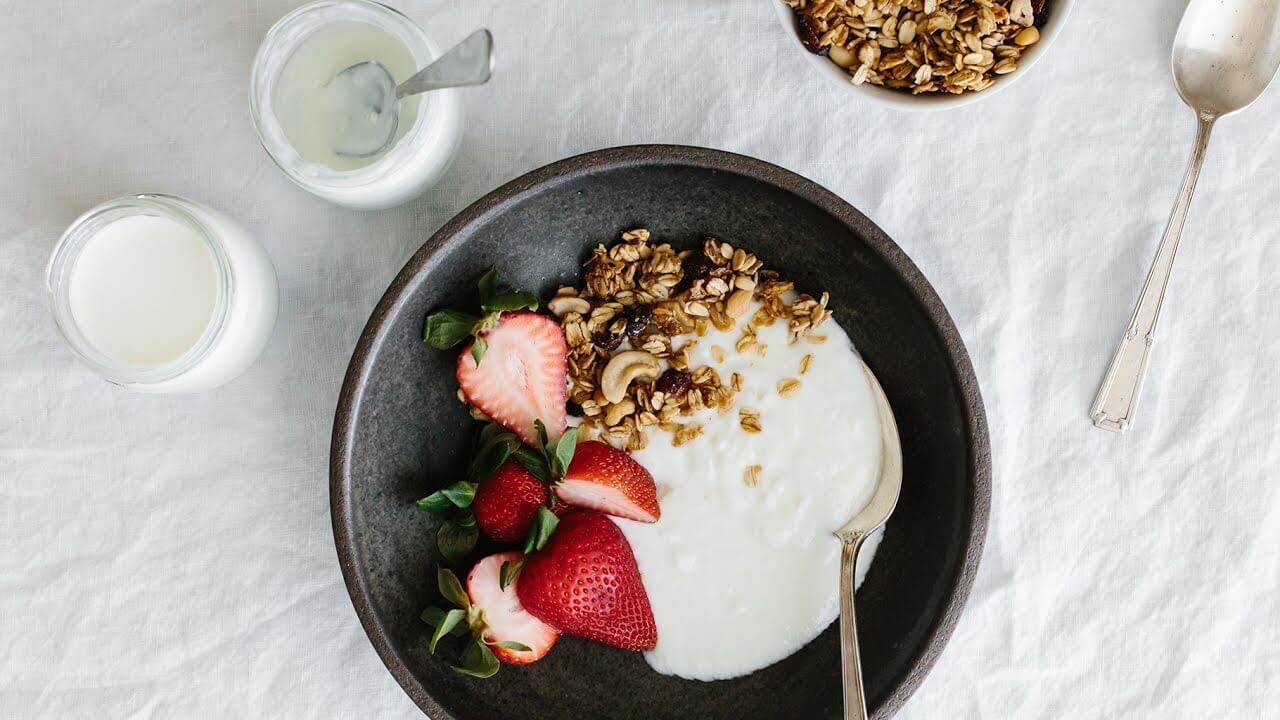
Ingredients For Yogurt Recipe
Milk: The base of the yogurt, providing the creamy texture and essential nutrients.
Plain yogurt: Acts as a starter culture, introducing the beneficial bacteria needed to ferment the milk into yogurt.
Technique Tip for Making Yogurt
To achieve the best texture and flavor in your homemade yogurt, make sure to use whole milk rather than low-fat or skim milk. Whole milk will give your yogurt a creamier consistency. Additionally, when heating the milk to 180°F (82°C), stir it frequently to prevent a skin from forming on the surface. After adding the plain yogurt with live cultures, ensure the mixture is kept at a consistent warm temperature, around 110°F (43°C), during the incubation period. You can use an oven with the light on, a yogurt maker, or even a warm spot in your kitchen to maintain this temperature.
Suggested Side Dishes
Alternative Ingredients
milk - Substitute with almond milk: Almond milk is a dairy-free alternative that can be used in place of regular milk. It has a slightly nutty flavor and works well in most recipes that call for milk.
milk - Substitute with soy milk: Soy milk is another dairy-free option that is high in protein and has a neutral flavor, making it a good substitute for milk in yogurt recipes.
milk - Substitute with coconut milk: Coconut milk adds a rich, creamy texture and a subtle coconut flavor, making it a good alternative for those who prefer a non-dairy option.
live cultures plain yogurt - Substitute with probiotic capsules: Probiotic capsules can be used to introduce live cultures into the milk, which is essential for making yogurt. Simply open the capsules and mix the contents into the milk.
live cultures plain yogurt - Substitute with kefir: Kefir is a fermented milk drink that contains live cultures similar to those in yogurt. It can be used as a starter culture for making yogurt.
Alternative Recipes Similar to Yogurt
How to Store or Freeze Your Yogurt
- Allow the freshly made yogurt to cool completely before storing. This ensures that it sets properly and maintains its creamy texture.
- Transfer the yogurt into an airtight container. Glass jars with tight-fitting lids are ideal as they prevent any unwanted odors from seeping in.
- Label the container with the date of preparation. Homemade yogurt typically stays fresh for up to 2 weeks when stored in the refrigerator.
- For longer storage, consider freezing the yogurt. Portion it into smaller containers or ice cube trays for easy thawing and use.
- When freezing, leave some space at the top of the container as yogurt expands when frozen.
- To thaw, transfer the desired amount of frozen yogurt to the refrigerator and let it thaw slowly overnight. This helps retain its texture and flavor.
- Stir the thawed yogurt well before using, as it may separate slightly during freezing and thawing.
- Avoid refreezing yogurt once it has been thawed to maintain its quality and prevent bacterial growth.
- For best results, use thawed yogurt in smoothies, baking, or as a base for dressings and dips, as its texture may be slightly altered after freezing.
How to Reheat Leftovers
For a creamy texture, gently warm the yogurt in a saucepan over low heat. Stir continuously to prevent it from curdling. This method is perfect for adding to soups or sauces.
If you prefer using a microwave, place the yogurt in a microwave-safe bowl. Heat it on low power in 15-second intervals, stirring in between, until it reaches the desired temperature. This is ideal for a quick breakfast topping over granola or fruit.
For a more even heat distribution, use a double boiler. Place the yogurt in a heatproof bowl set over a pot of simmering water. Stir occasionally until warmed through. This method is great for making a warm yogurt sauce to drizzle over grilled vegetables or meat.
If you have a sous-vide machine, set it to 110°F (43°C) and place the yogurt in a sealed bag. Submerge the bag in the water bath for about 10-15 minutes. This technique ensures the yogurt maintains its creamy consistency, making it perfect for adding to smoothies or desserts.
For a rustic touch, warm the yogurt in an oven set to the lowest temperature. Place the yogurt in an oven-safe dish, cover with foil, and heat for about 10-15 minutes. This method is excellent for creating a warm yogurt dip to serve with pita bread or vegetable sticks.
Essential Tools for Making Yogurt
Saucepan: Used to heat the milk to the desired temperature of 180°F (82°C).
Thermometer: Essential for accurately measuring the temperature of the milk to ensure it reaches 180°F (82°C) and then cools to 110°F (43°C).
Whisk: Used to mix the plain yogurt with the cooled milk thoroughly.
Jar: A container to hold the yogurt mixture while it incubates and ferments.
Towel: To wrap around the jar, keeping it warm during the 6-8 hour fermentation period.
Refrigerator: To chill the yogurt after fermentation, ensuring it sets properly before serving.
Time-Saving Tips for Making Yogurt
Use a thermometer: Ensure the milk reaches the correct temperatures quickly by using a digital thermometer.
Preheat the jar: Warm your jar in hot water before pouring in the yogurt mixture to maintain a consistent temperature.
Insulate the jar: Wrap the jar in a towel or place it in an insulated cooler to keep it warm for the fermentation period.
Use an oven light: Turn on your oven light and place the jar inside to create a warm environment for the yogurt to set.
Yogurt Recipe
Ingredients
Main Ingredients
- 4 cups Milk
- 2 tablespoon Plain yogurt with live cultures
Instructions
- Heat the milk in a saucepan until it reaches 180°F (82°C).
- Let the milk cool to 110°F (43°C).
- Whisk in the plain yogurt.
- Pour the mixture into a jar and keep it warm for 6-8 hours.
- Refrigerate before serving.
Nutritional Value
Keywords
More Amazing Recipes to Try 🙂
- Johnny Cake Recipe25 Minutes
- Arnold Palmer Recipe10 Minutes
- Top Ramen Salad Recipe15 Minutes
- Blueberry Loaf Recipe1 Hours 15 Minutes
- Greek Baklava Recipe1 Hours 15 Minutes
- Chakchouka Shakshouka Recipe30 Minutes
- Budget Jungle Juice Recipe10 Minutes
- BLT Recipe20 Minutes










Leave a Reply