Experience the rich and savory flavors of Korean cuisine with this beef bulgogi recipe. This dish features tender slices of beef sirloin marinated in a delightful blend of soy sauce, sugar, and sesame oil. It's a perfect balance of sweet and savory, making it a favorite for any meal.
When preparing this recipe, you might need to visit the supermarket for a few key ingredients. Sesame oil and sesame seeds are essential for authentic flavor but may not be staples in every pantry. Additionally, ensure you have fresh green onions and a good quality soy sauce to enhance the dish's taste.
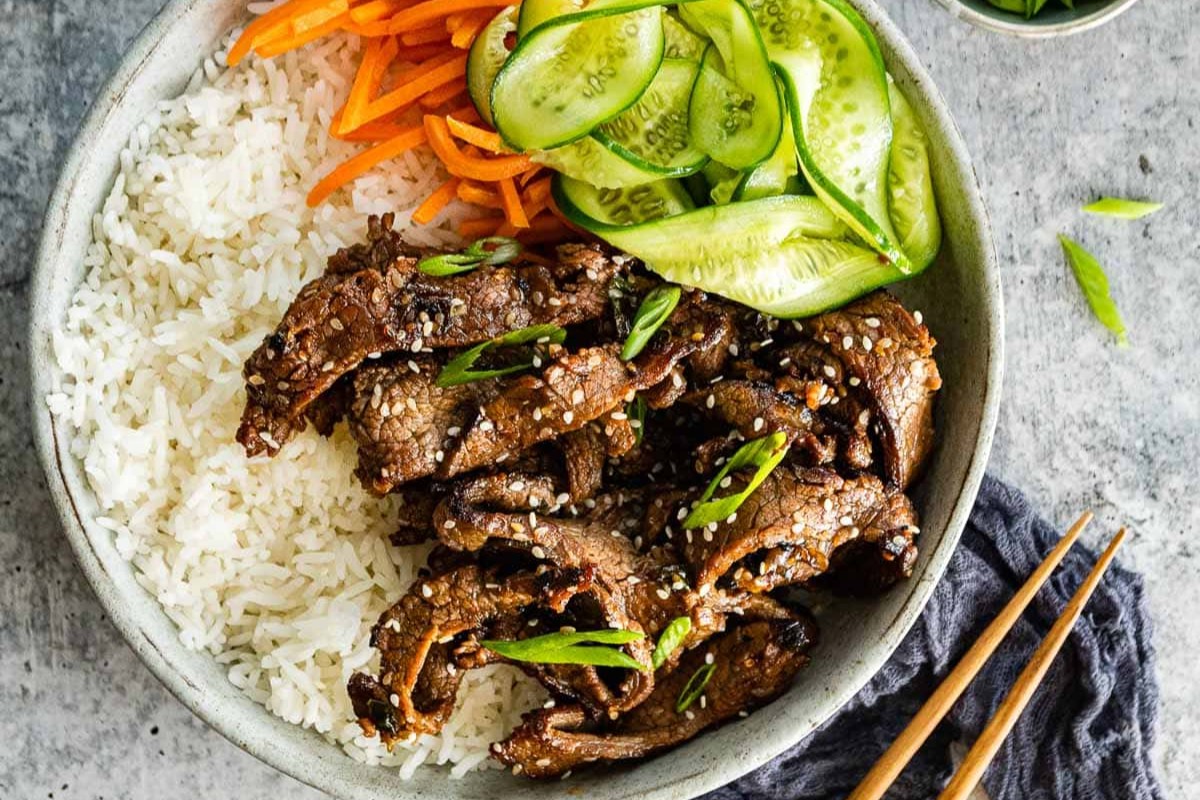
Ingredients For Beef Bulgogi Recipe
Beef sirloin: Thinly sliced for quick cooking and tender texture.
Soy sauce: Adds a salty and umami flavor to the marinade.
Sugar: Balances the saltiness with a touch of sweetness.
Sesame oil: Provides a nutty aroma and rich flavor.
Garlic: Minced to infuse the marinade with a pungent, savory taste.
Onion: Thinly sliced to add sweetness and texture.
Green onions: Chopped for a fresh, mild onion flavor and garnish.
Sesame seeds: Toasted for a crunchy texture and nutty taste.
Technique Tip for This Recipe
For a more tender and flavorful beef, consider marinating it overnight in the refrigerator. This allows the soy sauce, sugar, and sesame oil to fully penetrate the meat. Additionally, partially freezing the sirloin before slicing can help achieve those ultra-thin slices that cook quickly and evenly.
Suggested Side Dishes
Alternative Ingredients
beef sirloin - Substitute with chicken breast: Chicken breast is a lean protein that can absorb the marinade flavors well, making it a good alternative to beef sirloin.
beef sirloin - Substitute with tofu: For a vegetarian option, firm tofu can be used as it will soak up the marinade and provide a similar texture.
soy sauce - Substitute with tamari: Tamari is a gluten-free alternative to soy sauce and offers a similar umami flavor.
soy sauce - Substitute with coconut aminos: Coconut aminos is a soy-free and lower-sodium alternative that still provides a savory taste.
sugar - Substitute with honey: Honey adds sweetness and a slight floral note, making it a good substitute for sugar.
sugar - Substitute with maple syrup: Maple syrup provides a natural sweetness and a hint of caramel flavor.
sesame oil - Substitute with olive oil: Olive oil can be used in place of sesame oil, though it will lack the nutty flavor.
sesame oil - Substitute with peanut oil: Peanut oil has a mild nutty flavor that can mimic the taste of sesame oil.
garlic - Substitute with garlic powder: Garlic powder can be used if fresh garlic is not available, though the flavor will be less intense.
garlic - Substitute with shallots: Shallots can provide a milder, sweeter garlic-like flavor.
onion - Substitute with leeks: Leeks offer a milder onion flavor and can be used as a substitute.
onion - Substitute with red onion: Red onion can provide a slightly different but still suitable flavor profile.
green onions - Substitute with chives: Chives offer a similar mild onion flavor and can be used as a substitute.
green onions - Substitute with shallots: Shallots can provide a similar flavor and texture when chopped finely.
sesame seeds - Substitute with chia seeds: Chia seeds can add a similar crunch and nutritional benefits.
sesame seeds - Substitute with sunflower seeds: Sunflower seeds can provide a similar texture and nutty flavor.
Other Alternative Recipes Similar to This Dish
How to Store or Freeze This Dish
- Allow the beef bulgogi to cool completely before storing. This helps prevent condensation, which can lead to sogginess and spoilage.
- Transfer the cooled beef bulgogi into an airtight container. If you have a vacuum sealer, use it to remove as much air as possible to extend the shelf life.
- Label the container with the date of preparation to keep track of its freshness.
- Store the container in the refrigerator if you plan to consume the beef bulgogi within 3-4 days.
- For longer storage, place the airtight container in the freezer. Beef bulgogi can be frozen for up to 2-3 months without significant loss of flavor or texture.
- When ready to reheat, thaw the beef bulgogi in the refrigerator overnight. This gradual thawing helps maintain the quality of the meat.
- Reheat the beef bulgogi in a skillet over medium heat until it is warmed through. You can also use a microwave, but be sure to cover it to retain moisture.
- If you notice any off smells, discoloration, or slimy texture, discard the beef bulgogi immediately as these are signs of spoilage.
How to Reheat Leftovers
- For the best results, reheat your beef bulgogi on the stove. Place a non-stick skillet over medium heat, add a splash of sesame oil, and toss in the leftover beef. Stir occasionally until heated through, about 5-7 minutes.
- If you prefer the microwave, place the beef bulgogi in a microwave-safe dish. Cover it with a microwave-safe lid or plastic wrap to retain moisture. Heat on medium power for 1-2 minutes, stirring halfway through to ensure even heating.
- For a quick oven method, preheat your oven to 350°F (175°C). Spread the beef bulgogi evenly on a baking sheet, cover with aluminum foil, and bake for about 10-15 minutes or until heated through.
- If you have an air fryer, set it to 350°F (175°C). Place the beef bulgogi in the basket in a single layer and heat for about 5-7 minutes, shaking the basket halfway through to ensure even heating.
- For a more traditional approach, use a steamer. Place the beef bulgogi in a heatproof dish, cover it with aluminum foil, and steam over boiling water for about 10 minutes or until thoroughly heated.
Best Tools for This Recipe
Mixing bowl: Use this to combine the soy sauce, sugar, sesame oil, garlic, and onion for the marinade.
Knife: Essential for thinly slicing the beef sirloin and chopping the green onions.
Cutting board: Provides a stable surface for slicing the beef and chopping the vegetables.
Grill: Ideal for cooking the marinated beef to achieve a smoky flavor.
Skillet: An alternative to the grill, perfect for cooking the beef on the stovetop.
Tongs: Useful for flipping the beef slices while cooking to ensure even browning.
Measuring cups: Necessary for accurately measuring the soy sauce and sesame oil.
Measuring spoons: Needed for measuring the sugar and sesame seeds.
Garlic press: Handy for mincing the garlic cloves quickly and efficiently.
Serving plate: Use this to present the cooked beef bulgogi, garnished with green onions and sesame seeds.
How to Save Time on This Recipe
Prepare the marinade in advance: Mix the soy sauce, sugar, sesame oil, garlic, and onion the night before to save time on the day of cooking.
Use pre-sliced beef: Purchase pre-sliced beef sirloin from the store to skip the slicing step and save time.
Marinate in a ziplock bag: Place the beef slices and marinade in a ziplock bag for easy mixing and minimal cleanup.
Cook in batches: If using a skillet, cook the beef in batches to ensure even cooking and avoid overcrowding the pan.
Beef Bulgogi Recipe
Ingredients
Main Ingredients
- 1 lb Beef sirloin, thinly sliced
- ¼ cup Soy sauce
- 2 tablespoon Sugar
- 2 tablespoon Sesame oil
- 4 cloves Garlic, minced
- 1 small Onion, thinly sliced
- 2 stalks Green onions, chopped
- 1 tablespoon Sesame seeds
Instructions
- 1. In a bowl, mix soy sauce, sugar, sesame oil, garlic, and onion.
- 2. Add the beef slices to the marinade. Mix well and let it sit for at least 30 minutes.
- 3. Heat a grill or skillet over medium-high heat. Cook the beef until browned and cooked through, about 2-3 minutes per side.
- 4. Garnish with green onions and sesame seeds. Serve hot.
Nutritional Value
Keywords
Suggested Appetizers and Desserts
More Amazing Recipes to Try 🙂
- Mocha Coffee Recipe10 Minutes
- Air Fried Bologna Sandwich Recipe15 Minutes
- Lemon Curd Recipe20 Minutes
- Apple Muffins Recipe35 Minutes
- Japanese Egg Salad Sandwich Recipe20 Minutes
- Slow Cooker Chicken Recipe4 Hours 10 Minutes
- Waldorf Salad Recipe15 Minutes
- Oven Baked Bacon Recipe25 Minutes









Leave a Reply