Sawmill gravy is a classic Southern comfort food that pairs perfectly with biscuits, fried chicken, or mashed potatoes. This creamy, savory gravy is made from simple ingredients and is sure to become a favorite in your household. Whether you're preparing a hearty breakfast or a comforting dinner, sawmill gravy adds a rich and flavorful touch to any meal.
Most of the ingredients for sawmill gravy are common pantry staples. However, if you don't have pan drippings on hand, you can easily substitute with butter. Make sure to use all-purpose flour for the right consistency. Milk is another essential ingredient, so ensure you have enough before starting.
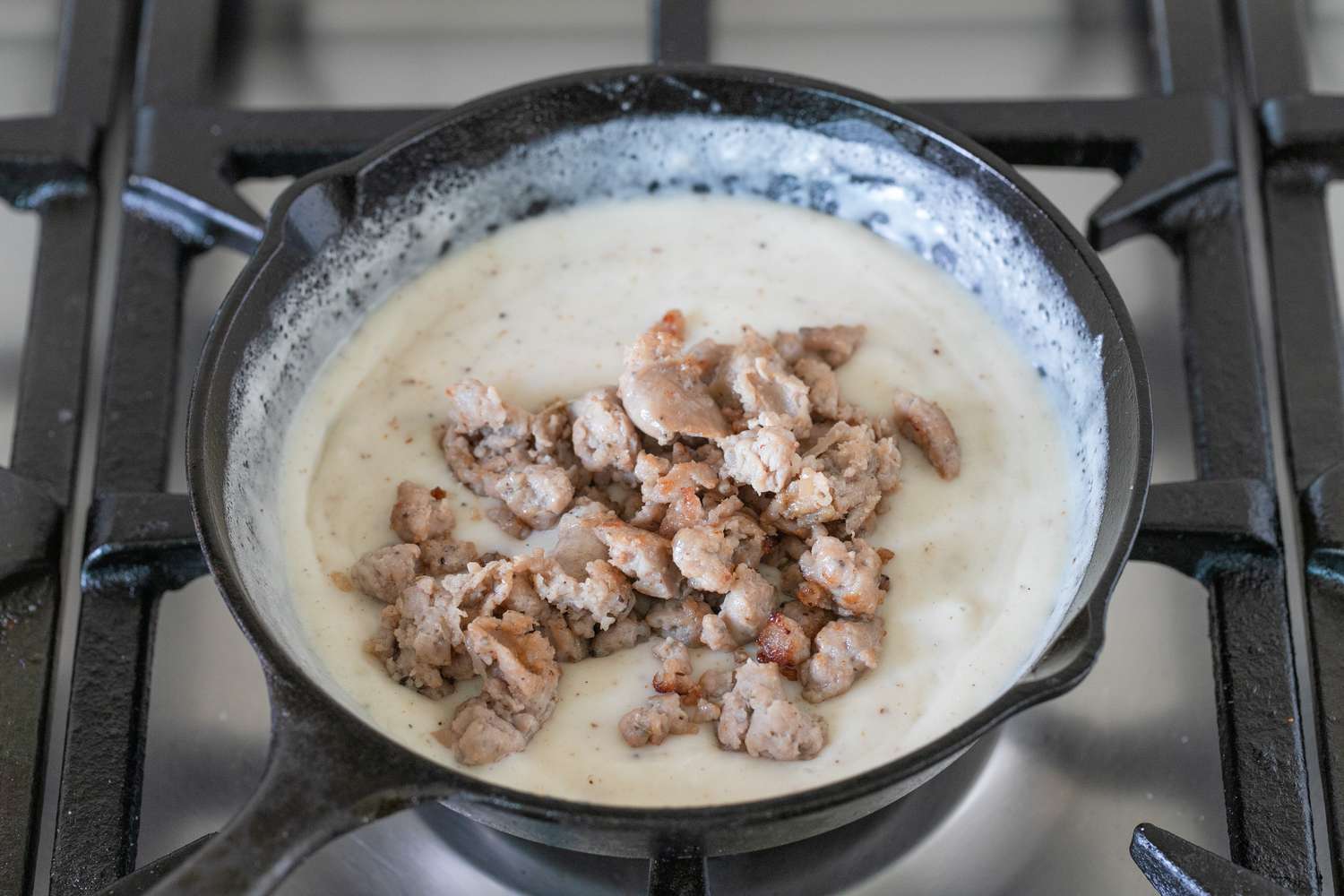
Ingredients For Sawmill Gravy
All-purpose flour: This is used to thicken the gravy and give it a smooth texture.
Milk: Adds creaminess and helps to achieve the desired consistency.
Pan drippings: Provides a rich, savory flavor. If unavailable, butter can be used as a substitute.
Salt: Enhances the overall flavor of the gravy.
Pepper: Adds a bit of spice and depth to the gravy.
Technique Tip for This Recipe
When making sawmill gravy, it's crucial to ensure the flour is cooked long enough to eliminate any raw taste. This step is known as making a roux. Cook the flour and pan drippings or butter until they reach a light brown color, which indicates the flour has cooked sufficiently. This will also add a nutty flavor to your gravy. When adding the milk, do so gradually and whisk constantly to prevent lumps from forming. If the gravy becomes too thick, you can always thin it out with a bit more milk. Season with salt and pepper to taste, but remember to taste as you go to avoid over-seasoning.
Suggested Side Dishes
Alternative Ingredients
all-purpose flour - Substitute with cornstarch: Cornstarch can be used as a thickening agent and will provide a similar consistency to the gravy.
all-purpose flour - Substitute with rice flour: Rice flour is a gluten-free alternative that will also help thicken the gravy without altering the flavor significantly.
milk - Substitute with heavy cream: Heavy cream will make the gravy richer and creamier, though it will also increase the calorie content.
milk - Substitute with unsweetened almond milk: Unsweetened almond milk is a good dairy-free alternative that will still provide a creamy texture.
pan drippings - Substitute with olive oil: Olive oil can replace pan drippings or butter, offering a healthier fat option while still providing a good base for the gravy.
pan drippings - Substitute with coconut oil: Coconut oil can be used as a dairy-free alternative to butter, adding a slight coconut flavor to the gravy.
salt - Substitute with soy sauce: Soy sauce can add a salty and umami flavor to the gravy, though it will also change the color slightly.
pepper - Substitute with white pepper: White pepper can be used to maintain the peppery flavor without altering the color of the gravy.
Other Alternative Recipes Similar to This Dish
How to Store / Freeze This Recipe
- Allow the sawmill gravy to cool completely before storing. This helps prevent condensation, which can make the gravy watery.
- Transfer the cooled gravy into an airtight container. For best results, use a container that fits the amount of gravy you have to minimize air exposure.
- Label the container with the date you made the gravy. This helps you keep track of its freshness.
- Store the container in the refrigerator. The sawmill gravy will keep well for up to 3-4 days.
- If you wish to freeze the gravy, pour it into a freezer-safe container or a heavy-duty freezer bag. Leave some space at the top, as the gravy will expand when frozen.
- Label the container or bag with the date and contents. This is especially useful if you have multiple frozen items.
- Place the container or bag in the freezer. The sawmill gravy can be frozen for up to 3 months.
- When ready to use, thaw the gravy in the refrigerator overnight. This slow thawing process helps maintain the texture and flavor.
- Reheat the gravy in a skillet over medium heat, stirring frequently to prevent it from sticking or burning. If the gravy is too thick, add a splash of milk or broth to reach the desired consistency.
- Taste and adjust the seasoning with salt and pepper as needed before serving.
How to Reheat Leftovers
Stovetop Method: Place the leftover sawmill gravy in a saucepan. Heat over medium-low, stirring frequently to prevent sticking and ensure even heating. If the gravy is too thick, add a splash of milk or chicken broth to reach the desired consistency.
Microwave Method: Transfer the gravy to a microwave-safe bowl. Cover with a microwave-safe lid or plastic wrap, leaving a small vent for steam to escape. Heat on medium power in 30-second intervals, stirring in between, until the gravy is hot and smooth. Add a bit of milk if it appears too thick.
Double Boiler Method: Fill the bottom of a double boiler with water and bring to a simmer. Place the gravy in the top section and heat, stirring occasionally, until warmed through. This gentle method helps prevent the gravy from scorching.
Slow Cooker Method: Pour the sawmill gravy into a slow cooker. Set to low heat and cover. Stir occasionally until the gravy is heated evenly. This method is ideal if you have a large batch and want to keep it warm for an extended period.
Oven Method: Preheat your oven to 300°F (150°C). Place the gravy in an oven-safe dish and cover with foil to prevent a skin from forming. Heat for about 15-20 minutes, stirring halfway through, until the gravy is hot. Add a bit of milk if needed to adjust the consistency.
Best Tools for This Recipe
Skillet: A flat-bottomed pan used for cooking the gravy over medium heat.
Whisk: A tool used to mix the flour into the pan drippings or butter and to gradually incorporate the milk, ensuring a smooth consistency.
Measuring cups: Used to measure out the flour and milk accurately.
Spatula: Useful for stirring the gravy as it thickens and for scraping the sides of the skillet.
Measuring spoons: Used to measure out the salt and pepper to taste.
Heat-resistant spoon: Handy for tasting the gravy to adjust seasoning.
How to Save Time on Making This Recipe
Prepare ingredients in advance: Measure out the flour, milk, and butter or pan drippings before starting.
Use a whisk: A whisk helps to mix the flour and milk smoothly, preventing lumps.
Preheat the skillet: Ensure the skillet is hot before adding the butter or pan drippings to speed up the process.
Constant stirring: Stir constantly to avoid burning and ensure even cooking.
Season at the end: Add salt and pepper after the gravy thickens to get the seasoning just right.
Sawmill Gravy Recipe
Ingredients
Main Ingredients
- ¼ cup all-purpose flour
- 2 cups milk
- ¼ cup pan drippings or butter
- to taste salt and pepper
Instructions
- Heat the skillet over medium heat and add the pan drippings or butter.
- Whisk in the flour and cook until it turns a light brown color.
- Gradually whisk in the milk, stirring constantly to avoid lumps.
- Cook until the gravy thickens, then season with salt and pepper to taste.
Nutritional Value
Keywords
More Amazing Recipes to Try 🙂
- Bloody Mary Mix Recipe10 Minutes
- Mint Juleps Recipe10 Minutes
- Grilled Peanut Butter and Jelly Sandwich Recipe10 Minutes
- Crumpets Recipe35 Minutes
- Dandelion Greens Recipe25 Minutes
- Nashville Hot Chicken Recipe40 Minutes
- Blueberry Scones Recipe35 Minutes
- Cinnamon Roll Pancakes Recipe35 Minutes









Leave a Reply